
The Roman Numeral Mystery: Restoring a Suite of Family Heirloom Dining Chairs in Dorset

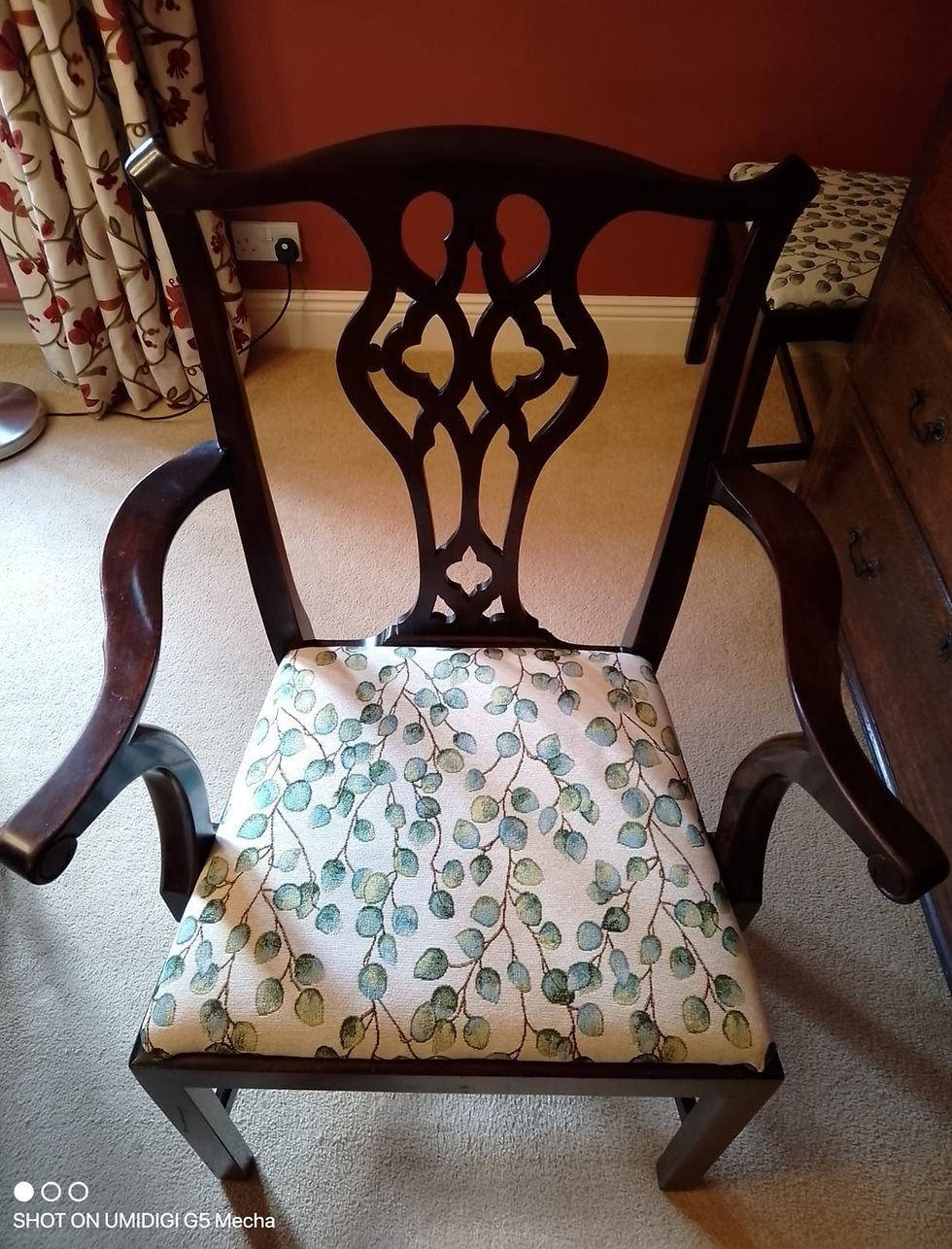
There is something incredibly special about working on furniture that has a deep history. Recently, I was commissioned to reupholster a set of matching, handmade dining room chairs that had been cherished by one UK family for over 45 years. They were well-loved, full of memories, and definitely in need of a well-deserved makeover. The client had chosen a breathtaking eucalyptus leaf tapestry fabric to breathe new life into them. But as any upholsterer will tell you, handmade furniture always has a story to tell—and sometimes, a few secrets hidden under the old fabric.
Antique Furniture Restoration: Uncovering Secrets of the Craft
The stripping-down process is always a bit like time travel. As I carefully removed the decades-old fabric and staples from the seat frames, I uncovered a fascinating glimpse into the original joiner’s workshop. Chiselled into the wood of each individual seat frame was a hand-carved Roman numeral (I, II, III, IV, and so on).

In traditional British furniture making, these marks were used by craftsmen to match specific drop-in seats to their corresponding chair frames. And as I started measuring, it became glaringly obvious why the original maker had to number them:
No two frames were alike. Because they were entirely handmade, the dimensions varied across the whole set.
The size discrepancy was significant. The smallest seat frame was a whopping 12mm smaller than the largest one.
When you are dealing with a mass-produced modern set, you can usually cut your fabric to a standard template. With bespoke heritage pieces like these, every single chair requires a completely tailored approach.
The Art of Pattern Matching for Bespoke Upholstery

Using a bold, organic print like a eucalyptus leaf tapestry on mismatched frames presents a real technical challenge. If you just slap the fabric on, the pattern will sit differently on every chair, ruining the visual harmony of the dining set when they are all tucked around the table. To honour the craftsmanship of the chairs, I had to meticulously pattern match the fabric across the entire suite.
Centering the Motif: I identified the focal point of the eucalyptus design to ensure the main leaf cluster sat in the exact same position on every single seat.
Accounting for the 12mm Variance: I carefully calculated the wrap-around for each frame, ensuring that despite the 12mm size difference, the visible pattern on top remained perfectly uniform.
Tensioning: Tapestry fabric has a beautiful weight but requires firm, even tensioning so the botanical pattern doesn't warp or distort over the edges of the drop-in pads.
The Finishing Touches on Custom Soft Furnishings
Once the leaf patterns were aligned and secured to perfection, it was time for the final details. The underside of a drop-in seat shouldn't be an afterthought. To complement the rich, earthy tones of the eucalyptus print and the aged timber, I backed each seat in a premium deep brown linen mix bottoming cloth.
This breathable, high-quality lining not only protects the interior materials from dust but gives the chairs a clean, professional, and luxurious finish from every single angle.
Ready for the Next 45 Years of Family Gatherings
Delivering these back to the family was an absolute joy. What started as a standard makeover turned into a beautiful celebration of mid-century British craft. Now wrapped in contemporary eucalyptus tones, these unique, hand-numbered frames are structurally revived and ready to sit at the heart of family gatherings for the next 45 years.
Frequently Asked Questions About Antique Chair Restoration
Why do some antique or vintage dining chairs have Roman numerals carved into them?
In traditional British furniture making, hand-carved Roman numerals were used by craftsmen to match specific drop-in seat pads to their corresponding wooden frames. Because historic furniture was made entirely by hand, dimensions varied slightly from chair to chair. Numbering the frames and the seat pads ensured a perfect fit for each individual piece during final assembly.
How do you pattern match fabric on a set of handmade dining chairs?
Pattern matching mismatched, bespoke frames requires a highly tailored approach. An upholsterer must meticulously identify the focal point of the fabric design (such as a specific leaf cluster or motif) and ensure it sits in the exact same central position on every seat. The wrap-around and tension must then be carefully adjusted on each individual frame to hide any slight structural size discrepancies across the suite.
What is a bottoming cloth on a drop-in chair seat, and why is it used?
A bottoming cloth is a breathable, high-quality lining fabric—such as a premium linen mix or dipped cotton—that is applied to the underside of a drop-in seat pad. It serves to protect the internal upholstery materials from dust, prevents the fabric from sagging over time, and ensures the furniture has a clean, professional, and luxurious finish from every visible angle.
Local Furniture Reupholstery Services in Dorset
Whether you are looking for traditional antique furniture restoration in Sherborne, custom window seat pads in Dorchester, or bespoke upholstery solutions anywhere across Yeovil, Weymouth, and South Somerset, we love bringing these unique design stories to life. Get in touch with Katherine at Dizzy Co Designs today to discuss how we can restore your vintage or antique chairs to their former glory!


Comments